
From the treasury of Vojvodina art
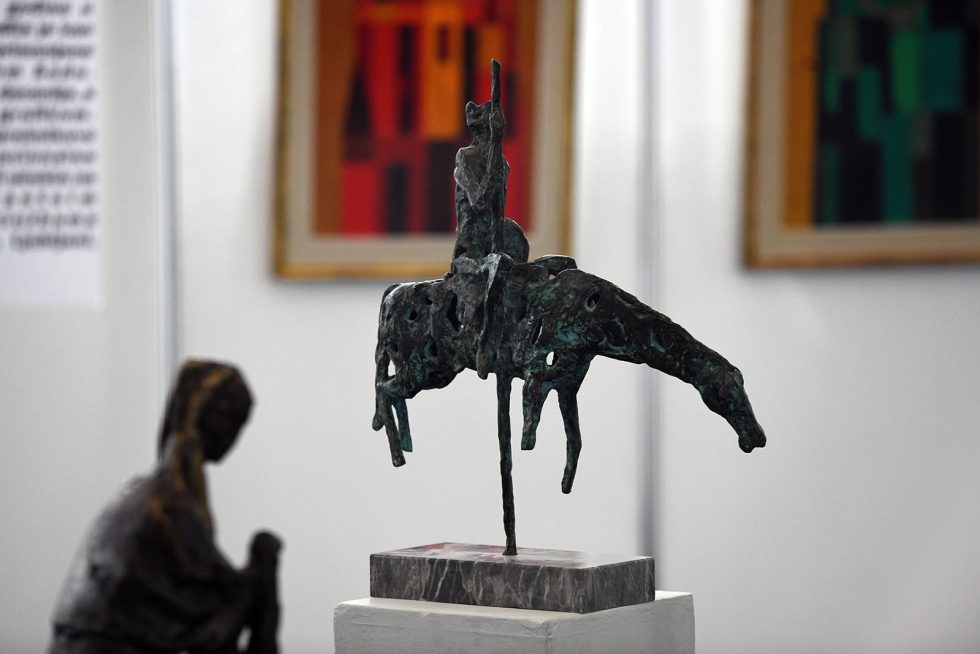
The exhibition From the Treasury of Vojvodina Art presented ten prominent Vojvodina artists who were active in the second half of the 20th century. Although nearly contemporaries, each of these artists left their individual mark on the Vojvodina art scene, anticipating a contemporary approach to painting and introducing local art into the modern currents of Yugoslav painting. Mar 24, 2025 The exhibition From the Treasury of Vojvodina Art presented ten prominent Vojvodina artists who were active in the second half of the 20th century. Although nearly contemporaries, each of these artists left their individual mark on the Vojvodina art scene, anticipating a contemporary approach to painting and introducing local art into the modern currents of Yugoslav painting. The eldest in the group of artists whose works make up this exhibition, Milan Konjović (1898–1993), is among the most prolific Serbian painters, whose oeuvre spans almost an entire century and left behind a series of anthological works. His artistic path included different phases, and all his characteristics were expressed through landscape painting. During his long creative life, he developed a recognizable style marked by strong colorism and an expressionist temperament. The exhibition also features the work of Boško Petrović (1922–1982), one of the most significant Vojvodina painters, whose creative engagement extended across various visual disciplines. In addition to easel painting, he worked with mosaics, drawing, watercolor, collage, and particularly focused on the promotion of tapestry. Another Vojvodina painter represented in the exhibition is Milan Kečić (1910–1998), whose primary motifs, alongside still lifes, were the plains of Vojvodina: fields, farmlands, and farms. The artist himself stated, “There is a world blind to the beauties of the plain, yet for the painter the plain offers itself in various forms. If he dares to paint only the bare, plowed earth and the high sky above it, that is for him the greatest challenge, a test for the demanding artistic struggle.” The painter and graphic artist Ankica Oprešnik (1919–2005), author of an authentic expression that critics described as expressive lyricism, stood out for her “specific treatment of surface elements, line, color, and the integral rhythm of graphic composition. Among the painters, the only sculptor whose work is represented in this exhibition is Jovan Soldatović (1920–2005), the author of imposing bronze sculptures, busts of notable figures, and numerous public monuments. The painter and graphic artist Milan Kerac (1914–1980), another creator from the first postwar generation of Vojvodina artists, went through all the phases and changes that marked visual art—from late Impressionism, colorist Expressionism, Fauvism, and abstraction to associative Expressionism. His work is characterized by a diversity of themes, motifs, and expressions. A frequent motif in his paintings was bulls; he remembered their eyes from his childhood and said that “between the whiteness of the horns and the sky, like rural embroidery, like a festive bouquet, the houses and above them the birds were united.” Another Vojvodina painter present in this exhibition is Stojan Trumić (1912–1983), a proponent of Expressionist painting and the author of numerous portraits of Vojvodina inhabitants, fields, farmlands, and village houses, characterized by intense color. The exhibition also features the work of Milivoj Nikolajević (1912–1988), a painter and graphic artist who, during his artistic development, moved from Post-Impressionism and Intimism to associative abstraction. Observing the branches along the riverbank, he was fascinated by the associations they suggested. In the work of painter Stevan Maksimović (1910–2002), critics noted the intertwining of refined lyricism with a certain strictness and measured approach in his geometrized forms. His landscapes and figurative compositions are not mere depictions of nature, but visual symbols and resonant metaphors, consistently realized throughout his entire body of work. Among the selected artists in this exhibition is Nikola Graovac (1907–2000), an artist with a rich pictorial oeuvre who cultivated colorist Expressionism. The artist himself stated that he painted as simply as he lived, with joy: “Painting is my rest, my necessity, the essence of my being. If someone were to take away my brushes and paints, I would cease to exist.” In the same spirit, the works of Mira Brtka (1930–2014) contribute a sense of playfulness and lightness to this exhibition through her monumental, simplified forms. The exhibition is completed by the work of Sava Halugin (1946), “Sava Šumanović’s Easel”, dedicated to the great artist after whom the visual arts award, presented by the Novi Sad Fair and BelArt, is named.