
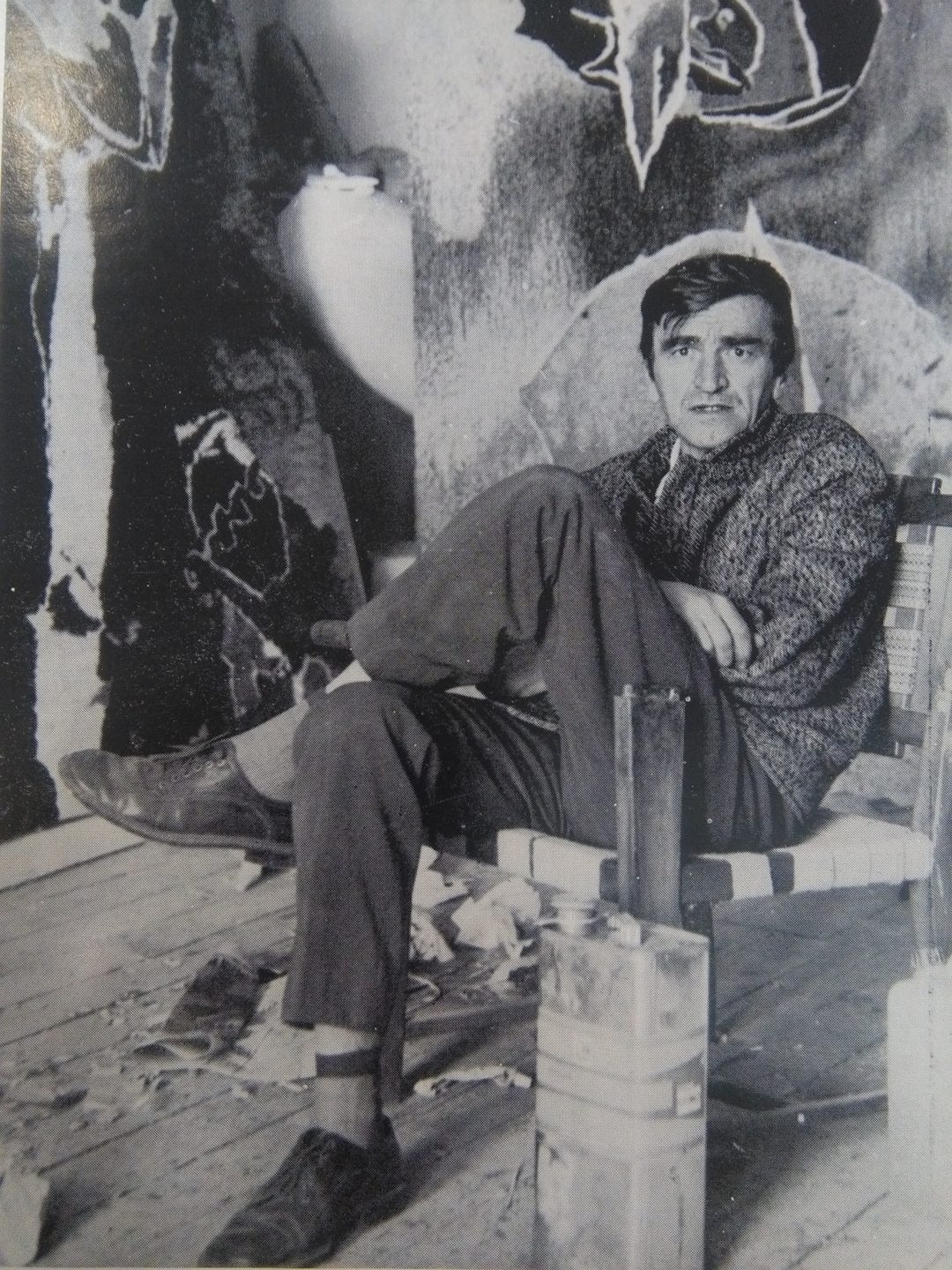
1919, Novi Sad – 1982, Novi Sad
Boško Petrović was born in Novi Sad in 1922. After completing his secondary education in his hometown, he enrolled at the Academy of Fine Arts in Belgrade in 1940. Due to the outbreak of war, he suspended his studies in 1941 and returned to Novi Sad. That same year, he enrolled at the Academy of Fine Arts in Budapest, from which he was swiftly expelled due to his involvement with the League of Communist Youth of Yugoslavia (SKOJ). Upon returning to Novi Sad in 1942, he was arrested and imprisoned in the city’s military barracks.
From 1944, he took an active part in the National Liberation War (NOR) as a member of the Propaganda Department of the General Staff of Vojvodina, and later as the head of the Department for Documentary and Artistic Exhibitions within the Agitprop of the JNOF.
He resumed his studies in 1945 at the Academy of Fine Arts in Belgrade under the tutelage of Professor Milo Milunović, but left in 1949 to join Milunović’s State Master Workshop. That same year, he found employment at the Cultural-Educational Association of Vojvodina in Novi Sad and was appointed a professor at the School of Applied Arts, where he taught until 1953. From 1953 to 1956, he served as a curator at the Museum of Vojvodina in Novi Sad. In 1961, together with the artist Etelka Tobolka, he founded “Atelje 61” – the first Yugoslav tapestry workshop at the Petrovaradin Fortress. From 1965 to 1969, he worked as an associate of the People’s University and subsequently the Workers’ University in Novi Sad.
Petrović graduated from the Academy of Fine Arts in Belgrade in 1969 and immediately began teaching at the Higher Pedagogical School in Novi Sad. In 1975, he was elected as an associate professor in the Fine Arts Department of the Academy of Arts in Novi Sad, becoming a full professor five years later.
He was among the founders of the art colonies in Bačka Topola (1953) and Ečka (1956), as well as “Group 57” in Belgrade (1957). He was also a member of the painting colony in Senta (from 1953) and the art colony in Bečej (from 1956). Throughout four decades of artistic creation, he held 36 solo exhibitions and, as a member of ULUS and SLUJ, participated in numerous group exhibitions both domestically and abroad. Between 1976 and 1978, he donated 24 oil paintings to the Gallery of Contemporary Fine Arts in Novi Sad (today the Museum of Contemporary Art of Vojvodina). Additionally, a significant number of his paintings, drawings, and collages are housed within the permanent collection of the Gallery of Contemporary Art.