
“Imaginary Encounter” at Galerija na Štrafti
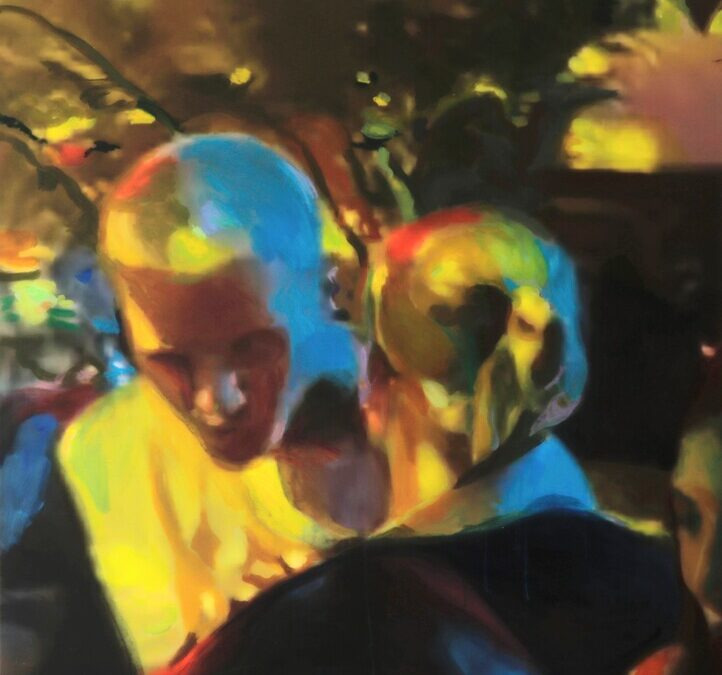
An exhibition by young painter Anđela Kopanja opened on June 17 at Galerija na Štrafti (at the corner of M. Pupin Boulevard and Pionirska Street). The work Imaginary Encounter will be on view until July 8, when Anđela’s concept will expand and move to the Galerija Akademije umetnosti u Novom Sadu as part of this year’s program of the EXP Projekat, with which Galerija na Štrafti collaborates within a network of exhibition spaces alongside the Kulturni centar Svilara and Šok Zadruga. Anđela Kopanja (1998, Novi Sad) completed her undergraduate academic studies in painting at the Akademija umetnosti u Novom Sadu in 2021, and went on to earn a Master’s degree in painting from the Fakultet likovnih umetnosti u Beogradu in 2023. She is currently in the first year of her doctoral academic studies at the same faculty, where she recently acquired the title of Research Associate in Teaching. She has presented her work in numerous group exhibitions and five solo exhibitions/projects. Among them, she highlights the group exhibitions Masterpieces IV at Galerija U10 and Zovem se sasvim obično at the Paviljon Cvijete Zuzorić, as well as the solo exhibition Just do at Galerija KvART BW and the solo project (Party) time at the Omladinski kulturni centar Opens. She was also a member of the organizational team of the Bijenale mladih (2022–23). Anđela’s practice spans a range of media, including painting, photography, video, light installations, objects, and sound. She lives and works in Belgrade. Alongside traditional and contemporary media, she often integrates collaborators from the field of music into her work. Through this approach, she seeks to encourage awareness and acceptance of dispersive reality as the only authentic reality in contemporary society. She draws inspiration from the atmosphere of nightclubs, within which she constructs individual concepts. In her previous works, she has addressed themes such as confronting everyday pressures and the capacity for conscious sensory activation through stimuli. Through her work, she explores the interaction between the individual and their environment, evoking how the human mind and body respond to the dynamism of everyday life. She creates immersive installations, often situated outside gallery spaces, within industrial sites and nightclubs. By integrating traditional and contemporary media with elements from the musical sphere, she aims to activate multiple senses and deepen the viewer’s engagement. Her work frequently examines identity, the influence of contemporary society on the individual, and questions of insecurity, belonging, trust, courage, and intimacy. She is currently working on the project “The Body in Transformation: From Risk to Adaptation,” in which she uses AI technology to explore reactions and transformations through the lens of the human body as an adaptive entity. Anđela Kopanja This exhibition is organized by BelArt Gallery in collaboration with the Crveni krst Novi Sad. Interview with Anđela Your works encompass different media and explore themes of interaction between humans and their environment, as well as sensory activation. How have these themes evolved throughout your artistic journey, from undergraduate to doctoral studies? Themes related to everyday life have occupied my attention since the beginning of my undergraduate studies. My interest in analyzing my immediate environment developed naturally, out of a desire to engage with subjects that are close and familiar to me, so that I could remain consistent with myself and my creative process. Moving from Novi Sad to Belgrade before starting my Master’s studies brought personal changes and new perspectives. During my Master’s studies at the Faculty of Fine Arts in Belgrade, I first encountered the theme of the nightclub. Today, I would define my practice as research into subthemes within the nightclub environment. This framework allows me to explore identity, the impact of contemporary society on the individual, and issues of insecurity, belonging, trust, courage, and intimacy. In my work, I attempt to depict sensations that form part of a collective identity and use them as a basis for analyzing various subthemes. This thematic structure enables me to investigate deep and often contradictory aspects of human experience, while examining how contemporary society shapes and redefines individual identity and interpersonal relationships. In addition to traditional and contemporary media, you often incorporate elements from the musical sphere. How do music and diversity contribute to the narrative you aim to create? The integration of traditional and contemporary media contributes to a layered narrative, allowing exhibition visitors to connect with the work on multiple levels. By activating several senses, I aim to break down the barrier between viewer and artwork, creating immersive installations. Musical and audio elements intensify emotional and physical experience, enabling audiences to immerse themselves in an atmosphere that transcends the purely visual. Light installations manipulate space and create fluid images that encourage reflection on perception itself. “Imaginary Encounter” explores themes of memory and identity through light and fluid imagery. Could you describe the conceptualization process and how it affects viewers’ perception of reality? Imaginary Encounter poses a key question: “What do we truly see, and what do we project from our own imagination?” Although painting is my foundation, I have always been interested in exploring what exists beyond the canvas. Light is not merely a tool for illumination but an equal medium that transforms perception. It symbolizes how susceptible our identities are to external influences—figures within the paintings become fluid, their identities shifting and dissolving under changing light conditions. Inspired by nightclub atmospheres, I seek to evoke a space where the boundaries between reality and illusion blur. By creating an ephemeral experience, I aim to open space for reflection on one’s inner world. You often present your work outside traditional gallery spaces, such as industrial settings and nightclubs. How does the choice of environment affect reception and interpretation? I am interested in how operating beyond socially imposed norms can expand perspectives and reinterpret artistic boundaries. Presenting work in unconventional spaces allows me to observe how different environments shape the viewer’s experience. I describe my installations as environmental compositions—paintings become part of the scenography, while visitors become the main protagonists through their active participation. Your current project,
Dubravka Lazić – Pričam ti priču
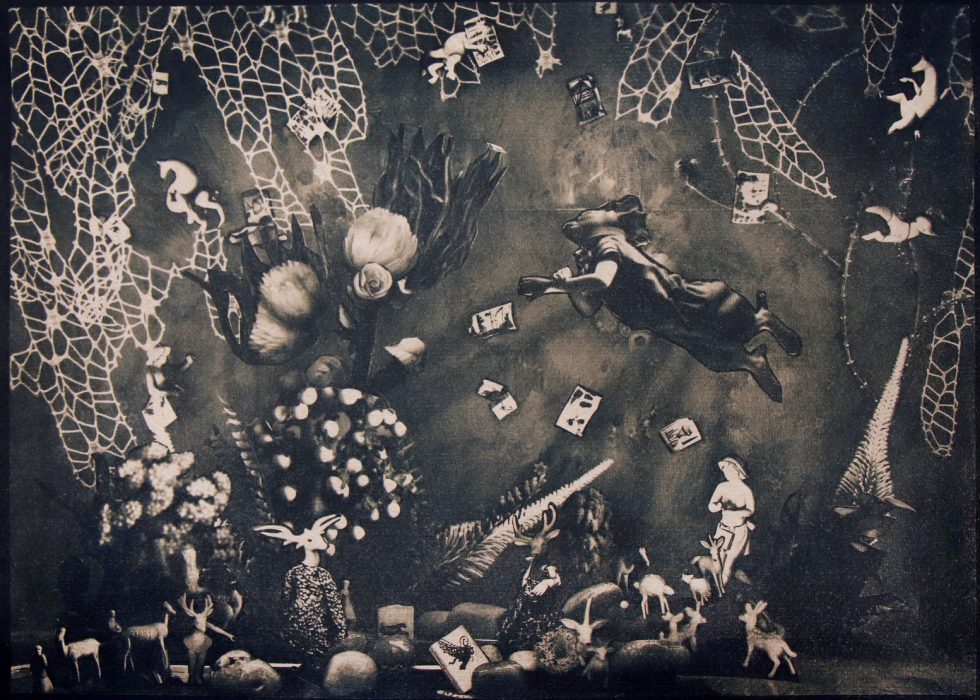
25. mart – 10 april 2025. u galeriji BelArt U galeriji BelArt, Dubravka Lazić predstavlja svoju najnoviju izložbu Pričam ti priču, u kojoj istražuje snagu narativa kroz pažljivo komponovane fotografske slike. Njena umetnost spaja prošlost i sadašnjost, realnost i fikciju, koristeći spoj savremenih digitalnih tehnika i tradicionalnih analognih postupaka. Svaka fotografija iz ovog serijala postaje priča za sebe, duboko ukorenjena u njenoj bogatoj umetničkoj i akademskoj karijeri. Sa bogatim iskustvom na polju fotografije, umetnosti i obrazovanja, Lazić je stvorila prepoznatljiv umetnički jezik koji spaja istoriju umetnosti i savremene tehnologije. Nakon prethodnog autorskog rada – serijala Igra igri grize rep – ideja o vizuelnoj, naglašeno deskriptivnoj seriji se razvila daljim promišljanjem o samom postupku građenja fotografske slike kao prostora za narativni kontent. Izgradnjom samog sadržaja se, opet, igra (kao zaista jedinstvena, slobodna, ljudska aktivnost) pokazala kao adekvatan metod za stvaranje novog rada. Fotografije iz serije Pričam ti priču prikazuju, svaka pojedinačno, određene teme kroz naglašeno narativne vizuelne celine. Svaka fotogafija je posvećena određenoj predstavi, ličnoj temi, i rezultat je snimljenog asamblaža sastavljenog od delova (objekata koji imaju posebno značenje ili printova urađenih od asimiliranih, prethodno snimljenih autorskih fotografija). Fotografski analogni postupak je u današnje doba savremenih tehnologija skoro prevaziđen, ali u isto vreme je i zbog toga posebno vredan. Spajanjem dva fotografska metodološka principa: stare i nove fotografske tehnike, serijal Pričam ti priču objedinjuje upravo ova dva pristupa – digitalno snimljene fotografije pretočene u negative velikih formata i analogni print fotografskom tehnikom iz 19. veka. Dubravka Lazić je diplomirala na osnovnim akademskim studijama na Akademiji umetnosti u Novom Sadu (1997), nakon toga magistrirala na Fakultetu primenjenih umetnosti u Beogradu (2000) i doktorirala na Akademiji umetnosti u Novom Sadu (2013). Obrazovana kao slikarka, fotograf i filmolog trenutno predaje na Akademiji umetnosti Novi Sad u zvanju redovnog profesora dok honorarno predaje i na Filozofskom fakultetu u Novom Sadu. U periodu od 2011. do 2016 godine predavala je na Fakultetu primenjenih umetnosti Univerziteta umetnosti u Beogradu a bila je i gostujući predavač na Univerzitetima van zemlje (West Attica Universtiy Athens, Communication University of China Beijing, Ludwigsburg University of Education, École supérieure de design Troyes). Umetničko-izlagačka delatnost Dubravke Lazić aktivno traje od 1998. godine. Svoja umetnička dela izlagala je na brojnim samostalnim i grupnim izložbama širom sveta. Takođe je aktivna i u okviru teoretskog autorskog delovanja te je autorka više objavljenih naučnih radova, članaka, jedne knjige i udžbenika. Organizator je i član više komisija Univerziteta u Novom Sadu, a pored toga i drugih stručnih organizacionih odbora i žirija, kao i rukovodilac, konsultant i učesnik na mnogim umetničkim projektima.
Exhibition from the Cycle “From the Treasury of Vojvodinian Art”
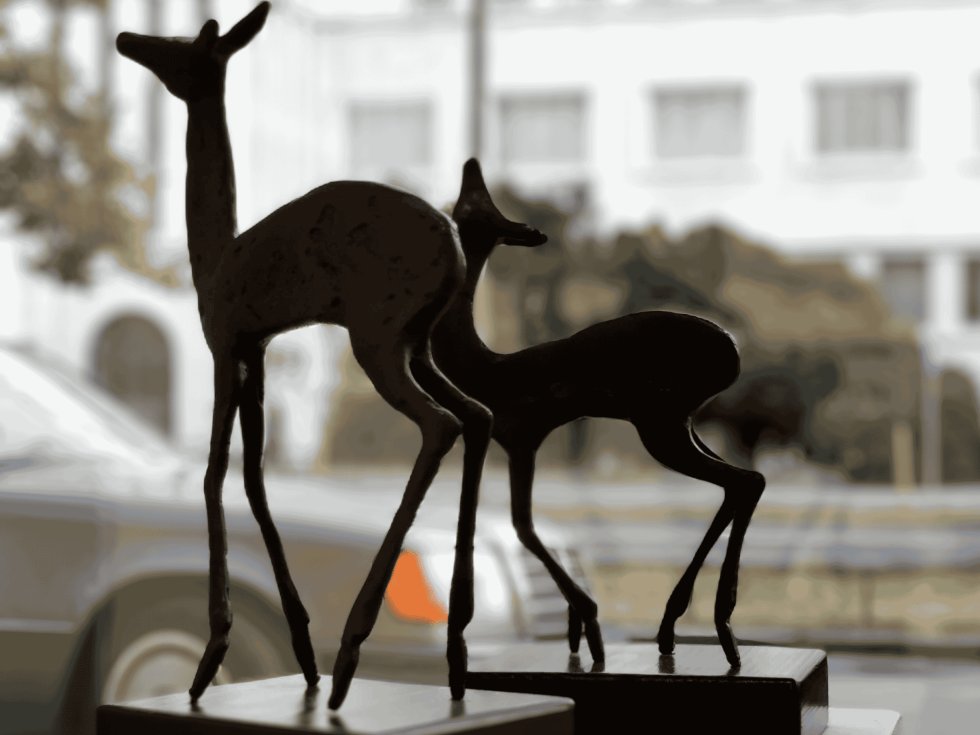
Galerija Bel Art proudly presents a new exhibition from the cycle “From the Treasury of Vojvodinian Art.” For this exhibition, works by nine of the most prominent Vojvodinian artists who worked in the second half of the 20th century have been selected. The exhibition includes Milan Kečić, Ankica Oprešnik, Boško Petrović, Milan Kerc, Stevan Maksimović, Branislav Vuleković, Milivoj Nikolajević, Milan Konjović, and Jovan Soldatović — artists whose names are indispensable in the art history of our region. Although they share a similar generational background, each of them enriched the Vojvodinian art scene with a distinctive personal mark, introducing contemporary aesthetic principles and connecting local art with the broader currents of Yugoslav painting. The oldest member of the group of artists is Milan Konjović (1898-1993), who is considered one of the most prolific Serbian painters. His rich oeuvre, filled with anthology works, shaped nearly the entire century of Serbian fine art. Through various phases of artistic development, the landscape became the key expression of his creativity, as he developed a recognizable style marked by an expressionist temperament and a sumptuous color palette. The exhibition also features a work by Boško Petrović (1922-1982), one of the most prominent painters from Vojvodina. His versatility encompassed various artistic disciplines, including mosaic, watercolor, drawing, and collage, while he devoted particular attention to tapestry, demonstrating deep artistic commitment and engaged innovation. Milan Kečić (1910-1998) presents works inspired by the plains landscape, in which he reveals the hidden beauties of nature. His ability to recognize complex emotions within simple landscapes reflects a profound connection with his surroundings. The artist himself once said: “There is a world that is blind to the beauty of the plains, yet to the painter the plains offer themselves in many forms. If he dares to paint only bare, ploughed land with the high sky above it, that is for him the greatest hardship, a challenge for a demanding artistic duel.” Ankica Oprešnik (1919-2005) brings an authentic expression that critics have described as expressive lyricism. Her skillful treatment of surface, line, and color creates harmony within her graphic compositions, leaving a powerful impression on viewers. Her husband, Milan Kerac (1914–1980), represents an artist of the first postwar generation, whose works are marked by a diversity of styles, ranging from Impressionism to associative Expressionism. His paintings, often infused with motifs of bulls, carry memories from childhood and convey deep emotional introspection. The only sculptor among these artists, Jovan Soldatović (1920-2005), is known for his bronze sculptures and public monuments. His works not only bring significant historical figures to life but also raise profound questions about identity and collective consciousness. Milivoje Nikolajević (1912-1988) represents an artist whose development evolved from Post-Impressionism to associative abstraction, captivating audiences with his ability to capture the essential associations of nature. Stevan Maksimović (1910-2002) bears the distinctive mark of refined lyricism, where restraint and geometric forms intertwine with the emotional strength of his landscapes and figurative compositions. His works transcend the mere description of nature, becoming visual symbols and resonant metaphors.
“The world is a stage, the stage is a world” at Galerija na Štrafti
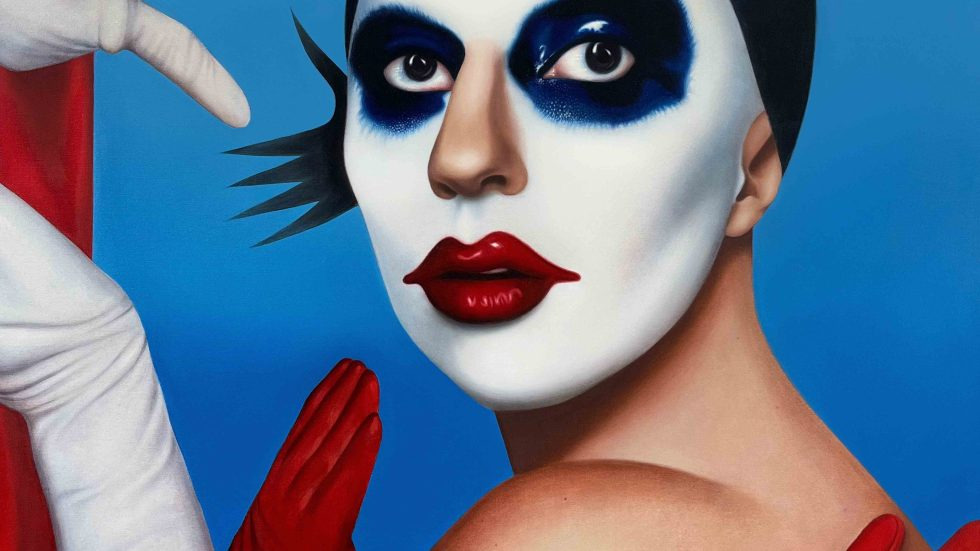
An exhibition of works by young visual artist and singer-songwriter Filip Baloš has opened at Galerija na Štrafti, located at the corner of Mihajla Pupina Boulevard and Pionirska Street in Novi Sad, featuring the piece “The World is a Stage, the Stage is a World.” Filip Baloš, born in 2001 in Novi Sad, comes from a music and drama-oriented family, where he developed a love for art from an early age. At just four years old, he began showing an interest in painting and music. As a child, he performed with his brother Boško at various music festivals and took part in numerous theatre productions. In 2016, he enrolled in the School of Design “Bogdan Šuput.” He participated in various group exhibitions and art colonies. Since 2017, he has been writing songs and producing music, quickly developing a distinctive and recognizable style. In June 2024, Filip graduated from the Akademija umetnosti u Novom Sadu, Department of Painting, earning the title of graduate visual artist. Through this work, Filip reflects on his early artistic influences and poses questions that shape his current approach, development, and creative path:Acting is transformation, a journey from one being into another, in which masks become the key to freedom. By blurring identity, the actor develops it and frees themselves from the judgment of critics – like a newborn persona assumed by a charlatan, illustrating the myth of death and rebirth whose scenes unfold repeatedly on the stage of the human subconscious. Each role brings new strength, while the power of art is reflected in the freedom it provides. Ultimately, it is the actor’s responsibility, once the performance ends, to remove the mask before the audience and reveal the fruits of that granted freedom – has he, in the end, remained himself, effortlessly fierce and passionate?– Filip Baloš
BelArt Gallery at Art Zagreb
December 11-14, 2025Oktogon, National Museum of Modern Art, Zagreb, Croatia BelArt Gallery participated for the second time in Art Zagreb, the international fair of contemporary visual arts, held from December 11 to 14 in the Oktogon of the National Museum of Modern Art. Launched in 2018, Art Zagreb quickly established itself as the central event of the Croatian art market. Once a year, the fair brings together the best galleries and artists from Croatia and the region. It is a unique meeting place for gallery owners, collectors, artists, curators, art historians, and art enthusiasts. As with all previous editions, this year’s fair featured a rich accompanying program, including panels and lectures on topics such as the art market, challenges of the secondary art market, the role of media in promoting and documenting art, and digital tools for audience development and gallery promotion. Detailed program information is available on the Art Zagreb website. Edita Kadirić, Seria Pastorala (2), 2024 Kristina Pirković, Kućica na drvetu, 2021 Na Art Zagrebu, galerija BelArt predstaviće tri umetnice: Sonju Gajić, Editu Kadirić i Kristinu Pirković. Sonja Gajić (1986, Beograd) je vajarka i slikarka čiji umetnički rad obuhvata različite medije i savremene pristupe formi i materijalu. Diplomirala je slikarstvo 2008. godine, a potom završila osnovne (2011) i master studije vajarstva (2013) na Univerzitetu umetnosti u Beogradu. Njena dela nalaze se u privatnim umetničkim kolekcijama širom sveta. Tokom poslednje decenije predstavila je niz samostalnih izložbi, među kojima su Almost Everything Touches the Soul (Galerija X Vitamin, 2022), Halley’s Comet (Navigator Art Gallery, 2021), Who Do You Love? (Galerija X Vitamin, 2020), Breaking Out Is Hard to Do (Galerija Kolarac, 2017) Živi i radi u Beogradu, gde održava aktivnu slikarsku i vajarsku praksu. Kristina Pirković (1991, Smederevska Palanka) je osnovne i master studije završila na Filološko-umetničkom fakultetu Univerziteta u Kragujevcu, na odseku za primenjenu umetnost, smer Zidno slikarstvo, 2014. i 2015. godine. Ostvarila je preko dvadeset samostalnih izložbi i učestvovala na brojnim grupnim izložbama u zemlji i inostranstvu. Članica je ULUS-a od 2018. godine. Tokom 2024. godine bila je rezident u Cité internationale des arts (Pariz, Francuska). Nagrađivana za crtež, sliku i najboljeg studenta, među nagradama se izdvaja Druga nagrada za crtež iz Fondacije Vladimir Veličković (2021). Živi i stvara u Beogradu. Izražava se kroz medij slike i crteža, a u poslednjem periodu istražuje i u polju skulpture. Edita Kadirić (1976, Banja Luka) je vizuelna umetnica čiji se rad bazira na istraživanju prepoznavanja i nelagode kroz vizuelni storytelling. Stekla je visoko obrazovanje iz domena vizuelnih umetnosti (Akademija umetnosti Novi Sad, Fakultet likovnih umetnosti u Beogradu, Umetnička rezidencija u Parizu i Fakultet lepih umetnosti u Barseloni). Profesionalni angažman od 2000. do 2016. uključuje Galeriju Prom (Minhen) i od 2016. do danas Art fondaciju Carmen Wurth. Njeni radovi se nalaze u brojnim vrednim privatnim kolekcijama i institucijama u Evropi i Americi. Izlagala je na brojnim samostalnim i grupnim izložbama. Živi i radi na relaciji Francuska – Španija – Srbija. Sonja Gajić, Spring, 2021 At Art Zagreb, BelArt Gallery will present three artists: Sonja Gajić, Edita Kadirić, and Kristina Pirković. Sonja Gajić (1986, Belgrade) is a sculptor and painter whose work spans various media and contemporary approaches to form and material. She graduated in painting in 2008 and later completed her undergraduate (2011) and master’s studies in sculpture (2013) at the University of Arts in Belgrade. Her works are held in private collections worldwide. Over the past decade, she has presented several solo exhibitions, including Almost Everything Touches the Soul (Galerija X Vitamin, 2022), Halley’s Comet (Navigator Art Gallery, 2021), Who Do You Love? (Galerija X Vitamin, 2020), and Breaking Out Is Hard to Do (Galerija Kolarac, 2017). She lives and works in Belgrade, maintaining an active painting and sculpting practice. Kristina Pirković (1991, Smederevska Palanka) completed her undergraduate and master’s studies in applied arts, mural painting, at the Faculty of Philology and Arts, University of Kragujevac, in 2014 and 2015. She has held over twenty solo exhibitions and participated in numerous group exhibitions in Serbia and abroad. A member of ULUS since 2018, she was a resident at Cité internationale des arts in Paris in 2024. She has received awards for drawing, painting, and as the best student, including the Second Prize for Drawing from the Vladimir Veličković Foundation (2021). She lives and works in Belgrade, expressing herself primarily through painting and drawing, while recently exploring sculpture. Edita Kadirić (1976, Banja Luka) is a visual artist whose work explores recognition and discomfort through visual storytelling. She completed her higher education in visual arts at the Academy of Arts in Novi Sad, the Faculty of Fine Arts in Belgrade, the Artist Residency in Paris, and the Faculty of Fine Arts in Barcelona. Her professional engagements from 2000 to 2016 include Galerie Prom (Munich) and, from 2016 to the present, the Carmen Wurth Art Foundation. Her works are part of numerous prestigious private and institutional collections across Europe and the United States. She has participated in numerous solo and group exhibitions and lives and works between France, Spain, and Serbia.
Sara Savić – Sterile Touch at Galerija na Štrafti
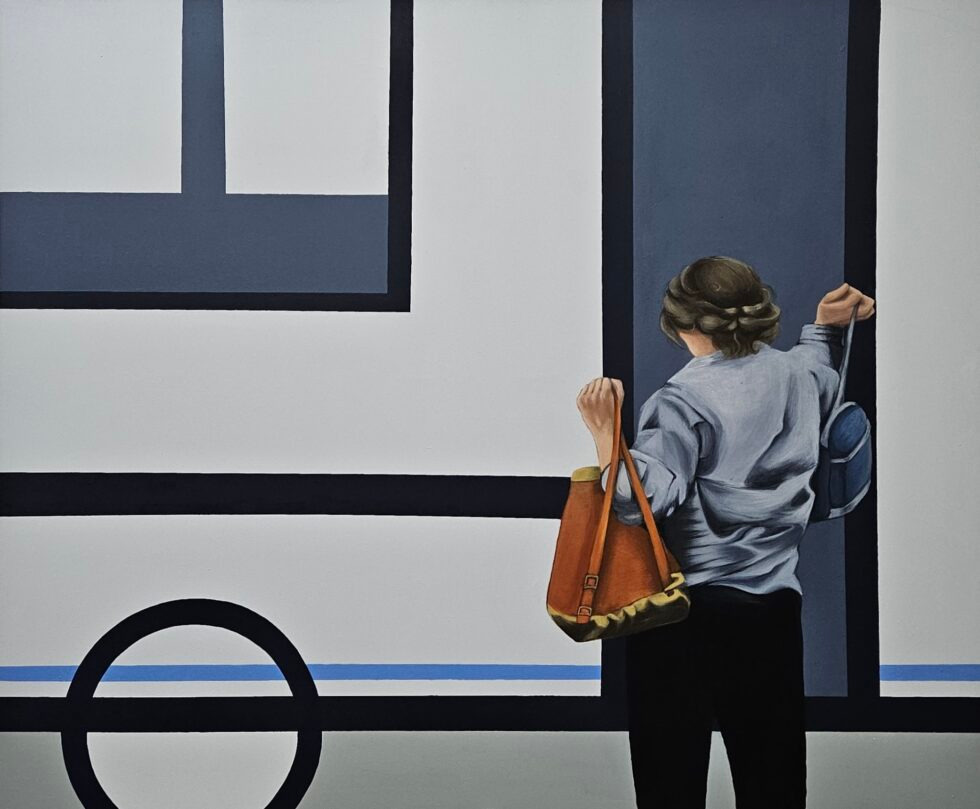
24. november, 2025 – 9. january 2026. Starting from a personal feeling of discomfort in the bus – a space of forced proximity and simultaneous alienation – Sara Savić develops environments in which the human figure is almost entirely absent. Geometrized surfaces, clean lines, and controlled shadows create sterile, almost hermetic spaces that visually reflect the impossibility of establishing contact. In one of the works, a figure does appear, but instead of disrupting the aesthetics of emptiness, it further emphasizes it, raising the question of the boundary between the human and the space that rejects them. Sara Savić (Bor, 2001) completed her secondary education at the “Bogdan Šuput” School of Design and her undergraduate studies in painting at the Academy of Arts in Novi Sad, in the class of Prof. Goran Despotovski, graduating in 2025. She has participated in several group exhibitions and held one solo exhibition and is a recipient of the annual award for the most successful work in the field of painting. She works in acrylic on canvas, reducing everyday scenes to minimal forms and pure colors, creating imaginary spaces where the figure appears only as an occasional suggestion.
Sculptural: Journey… Space… Context…
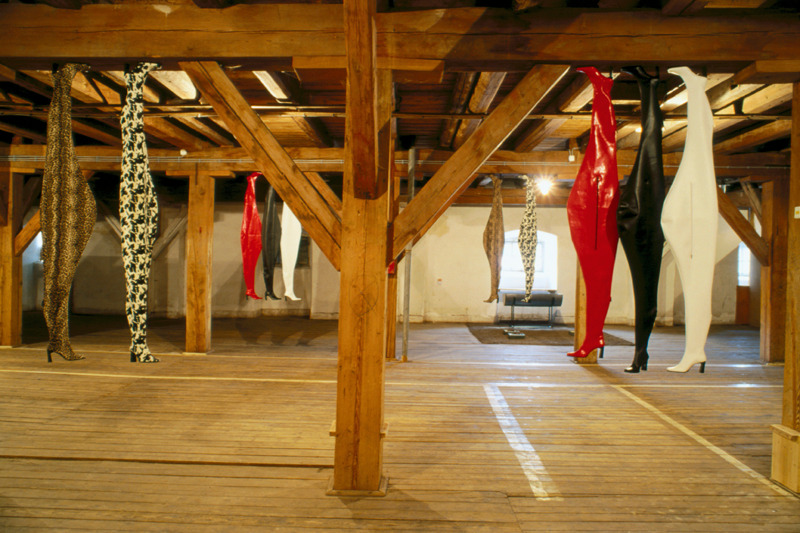
The exhibition Sculptural: Journey… Space… Context…, organized by BelArt Gallery, was installed on October 30, 2025, at multiple locations in Novi Sad – including Galerija SULUV, Mali Likovni Salon, as well as Distrikt (Atelje 61, Biro, and open space). The exhibition was curated by Svetlana Mladenov. The project explores how the experiences and challenges of the 1990s are reflected in contemporary sculpture, and how ideas of sculptural practice today are reconsidered through space, material, and the processual nature of the artistic act. The exhibition presents works by 56 artists: Dušan Otašević, iz arhive umetnika Vesna Perunović, iz arhive umetnice Spaces and Artists Distrikt – Atelje 61 Gallery, No. 2 (Bulevar despota Stefana 5)Exhibition open until November 16 Artists: Zdravko Joksimović, Božica Rađenović, Dragana Ilić, Olivera Parlić Karajanković, Goran Despotovski, Vesna Perunović, Dejan Dimitrijević, Igor Antić, Maja Rakočević Cvijanov, Milorad Mića Stajčić, Gabriel Glid, Mileta Prodanović, Milica Ružičić, Jelica Radovanović, Dejan Anđelković, Čedomir Vasić, Slavoljub Caja Radojčić, Željka Momirov, Đorđije Crnčević, Vladimir Perić, Nina Kocić, Dragoljub Raša Todosijević, Selman Trtovac Distrikt – Biro (Bulevar despota Stefana 5)Exhibition open until November 16 Artists: Srđan Apostolović, Dobrivoje Krgović, Rastislav Škulec, Dragan Rakić, Saša Pančić, Predrag Kešelj, Bosiljka Zirojević, Kosta Bogdanović, Olga Jevrić, Mira Brtka, Ana Bešlić, Miroslava Kojić, Dragoslav Krnajski, Tomislav Todorović, Nada Denić, Zvonimir Santrač, Slobodan Kojić, Dragan Vojvodić, Dušan Petrović, Slobodan Era Milivojević, Gordana Kaljalović, Zoran Todorović, Lana Vasiljević Distrikt – Open Space (Bulevar despota Stefana 5) Artists: Branislav Nikolić, Aleksandar Stanojević Kempa Galerija SULUV (Bulevar Mihajla Pupina 9)Exhibition open until November 8 Artists: Adrien Újházi, Radoš Antonijević, Ivana Ivković, Stevan Kojić, Marica Radojčić, Ivana Rakidžić, Lea Vidaković Mali Likovni Salon (Bulevar Mihajla Pupina 9)Exhibition open until November 21 Artists: Dušan Otašević, Mrđan Bajić Concept:The exhibition covers the period from 1990 to 2025, during which sculptural concepts from the 1990s, those at the turn of the century, and those of the 21st century establish mutual relationships, creating dialogue and offering new, meaningful communication. The project emphasizes the importance of sculpture within the Serbian artistic space and the place it deserves within it. The exhibition examines whether and how the challenges of the 1990s, accumulated in the sculpture of that period, are reflected in the sculpture of the new millennium. At the beginning of the 1990s, new sculpture initiated and anticipated changes and new artistic research that followed throughout the decade. For the first time, sculpture gained primacy over other media, asserting itself through new ideas and a new spirit. The new sculpture employed a more rationalistic approach, reduced forms, geometrism, neo-constructivism, and references to minimalist traditions. The postmodern atmosphere of the 1980s continued into the 1990s through pronounced individualism and a strong subjectivist approach, where the artist as an individual held a central role. During the 1990s, sculpture expanded into the broader field of art, exploring new modes of presentation through monumental objects and installations. The introduction of new media allowed the combination and intersection of different materials, methods, and disciplines, opening a rich field for artistic exploration. The echoes of these efforts by 1990s sculptors culminated at the turn of the century, when numerous spatial projects were realized not only in gallery spaces but also in alternative and open public spaces, which can be categorized as contextual art. During the new millennium, after a temporary fascination with new technologies, there was a return to sculpturality, sculptural form, and its interaction with space. Sculptures, objects, and installations emerged, building on the achievements of 1990s sculpture but infused with the different context of the contemporary moment. They carry new ideas and a new spirit, discernible through conceptually guided and arranged forms driven by the artist’s original idea, through processuality and dialogue with space. Lea Vidaković, iz arhive umetnice Dragoslav Krnajski, iz arhive umetnika Acknowledgments:We extend our gratitude to the City of Novi Sad, the Secretariat for Culture, Public Information and Relations with Religious Communities of APV, the Terra Center for Fine and Applied Arts in Kikinda, the Museum of Contemporary Art of Vojvodina, the Museum of Contemporary Art in Belgrade, the Atelje 61 Tapestry Workshop, the Mira Brtka Foundation, Ivana Markez Filipović – curator of the Pančevo Gallery of Contemporary Art, Dejan Kažić, Verica Nemet – curator of the Terra Museum in Kikinda, SULUV, the City Cultural Center, and the Mali Likovni Salon.
Exhibition of Austrian Artist Asunta Abdel Azim Mohamed: Superstitions at BelArt Gallery
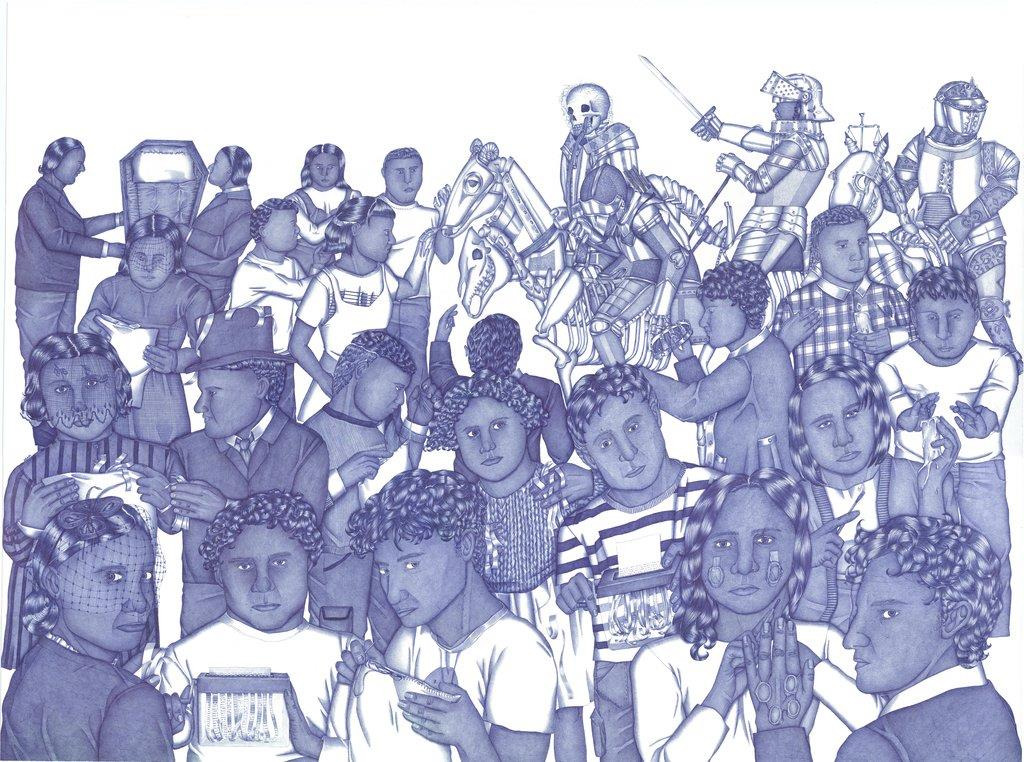
October 28 – November 17, 2025 BelArt Gallery, in collaboration with the Austrian Cultural Forum and the galleries Hilger (Vienna) and X-Vitamin (Belgrade), presented the exhibition Superstitions by artist Asunta Abdel Azim Mohamed. The opening took place on October 28 at 7:00 PM in the gallery space, and the exhibition was on view to the public until November 17. The exhibition was officially opened by Lioba Bamer, director of the Austrian Cultural Forum in Belgrade.Asunta Abdel Azim Mohamed was born in 1993 in Klagenfurt (Carinthia, Austria). She initially studied Romance languages and literature, and later graphic design and printmaking at the University of Applied Arts. According to the artist, her favorite media are ballpoint pen, marker, pen, and ink on paper. The drawings of Asunta Abdel Azim Mohamed are simultaneously a satire of her generation in Vienna and a study of the human condition—a painful moral comedy, with death as a recurring motif. They are dense with incidents and rich in allusions: to music, film, literature, and art; from the Baroque to Symbolism; to medicine, anatomy, graphic arts, and contemporary popular culture. Vienna lies between East and West, where genres meet, which further influences her work. Her intelligence regarding the nature of drawing and the apparent ease with which she draws result in work that feels almost self-aware: this is art of perception, even when it concerns the lives of others, their ambiguous and unresolved stories.
Sonja Knežić – Low Sun at the Gallery on Štrafta
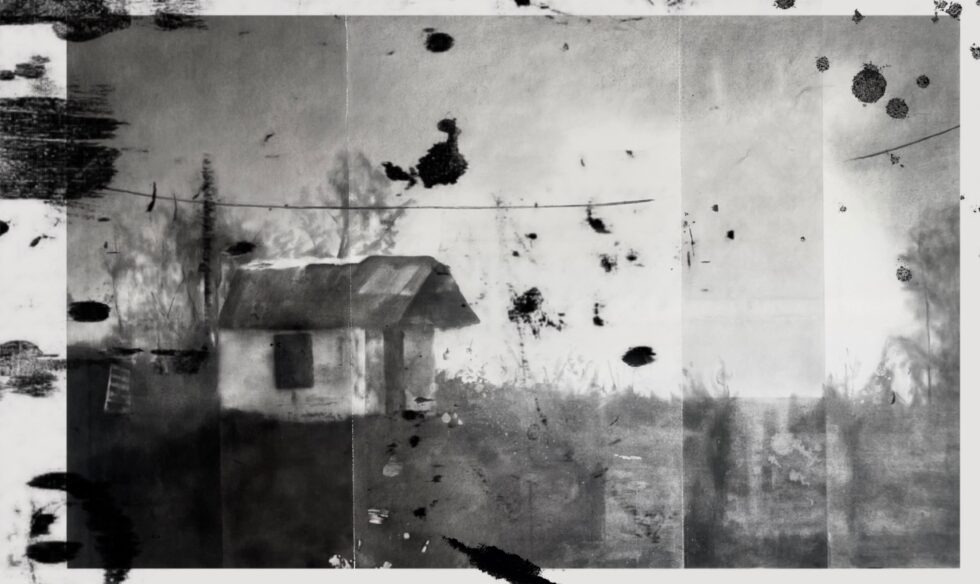
The work Low Sun, from the series Other Places – Transgression of Space, created during her master’s research, is an exploration of the aesthetics of flatland landscapes into inner, mental spaces. Through the transition from the physical to the conceptual world, the artist investigates the dialogue between connection with one’s own landscapes of consciousness and the sense of abandonment that arises from distancing oneself from reality. In addition to graphic sheets, special emphasis is placed on exploring the drawing medium by examining the endurance and limits of charcoal and paper. The work belongs to the series Other Places – Transgression of Space, created during her master’s studies, and focuses on translating the aesthetics of flatland landscapes into mental spaces. Through the transgression from the physical to the inner world, it explores the dichotomy between connection with one’s own mental landscapes and simultaneous disconnection from the real, giving rise to a specific sense of abandonment. In addition to the graphic sheets that are part of the series, special emphasis is placed on exploring the drawing medium by examining the endurance, potential, and limits of basic drawing materials—charcoal and paper. Sonja Knežić was born in 1993 in Novi Sad. She began her undergraduate studies in graphics at the Academy of Arts in Novi Sad in 2019, in the class of Professor Aleksandar Botić, and enrolled in the master’s program in the same department in 2023. During her studies, she participated in exchange programs in Gdańsk and Ljubljana. She has taken part in over 20 exhibitions in Serbia and abroad. In 2023, she was awarded the Erste Foundation Prize for the most successful art students in Serbia, as well as the third prize at the Student Biennale of Graphics in Gdańsk. In 2024, she received the Little Prince Award for her artistic work.